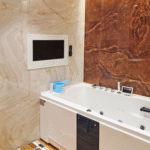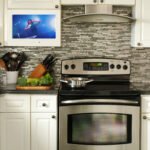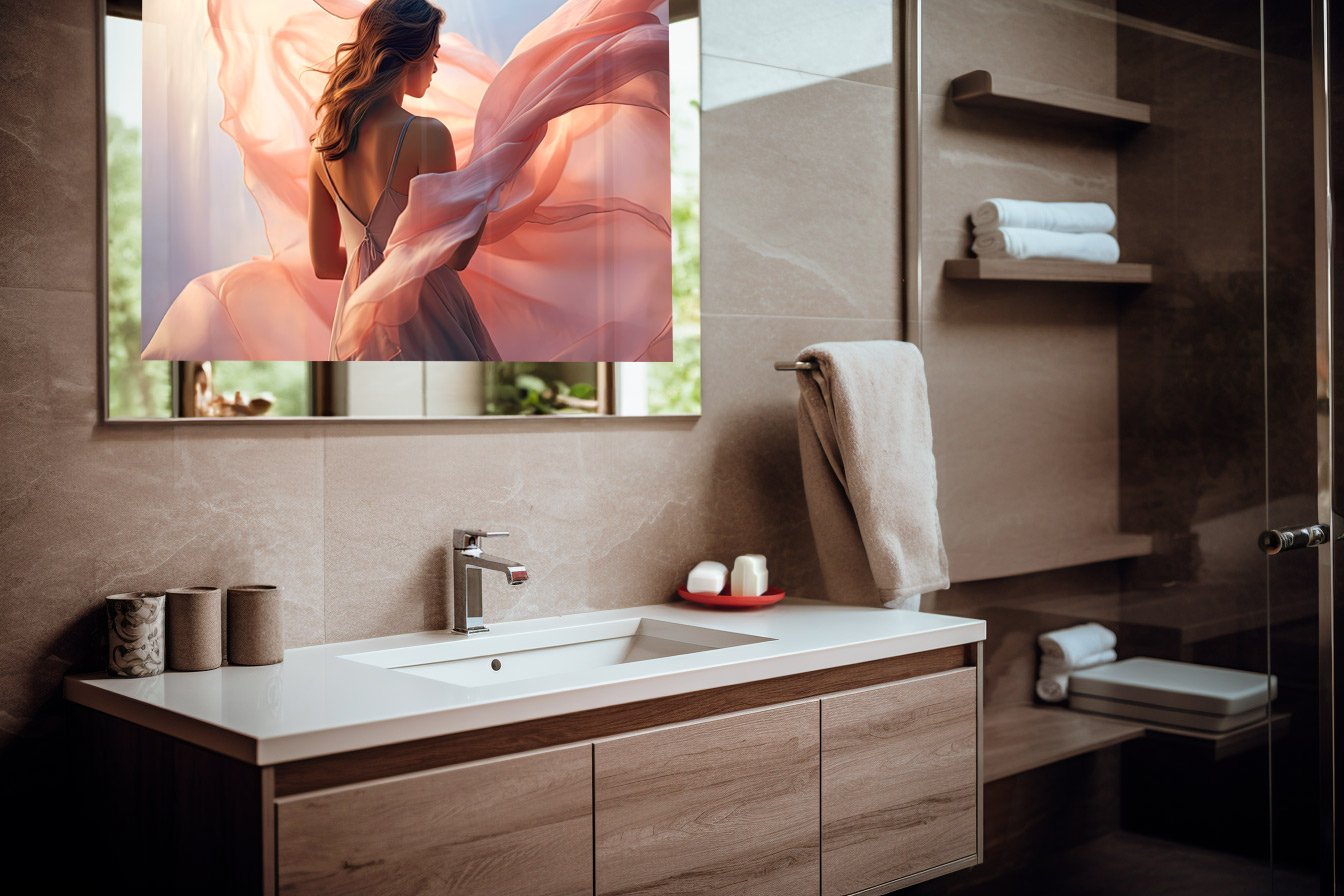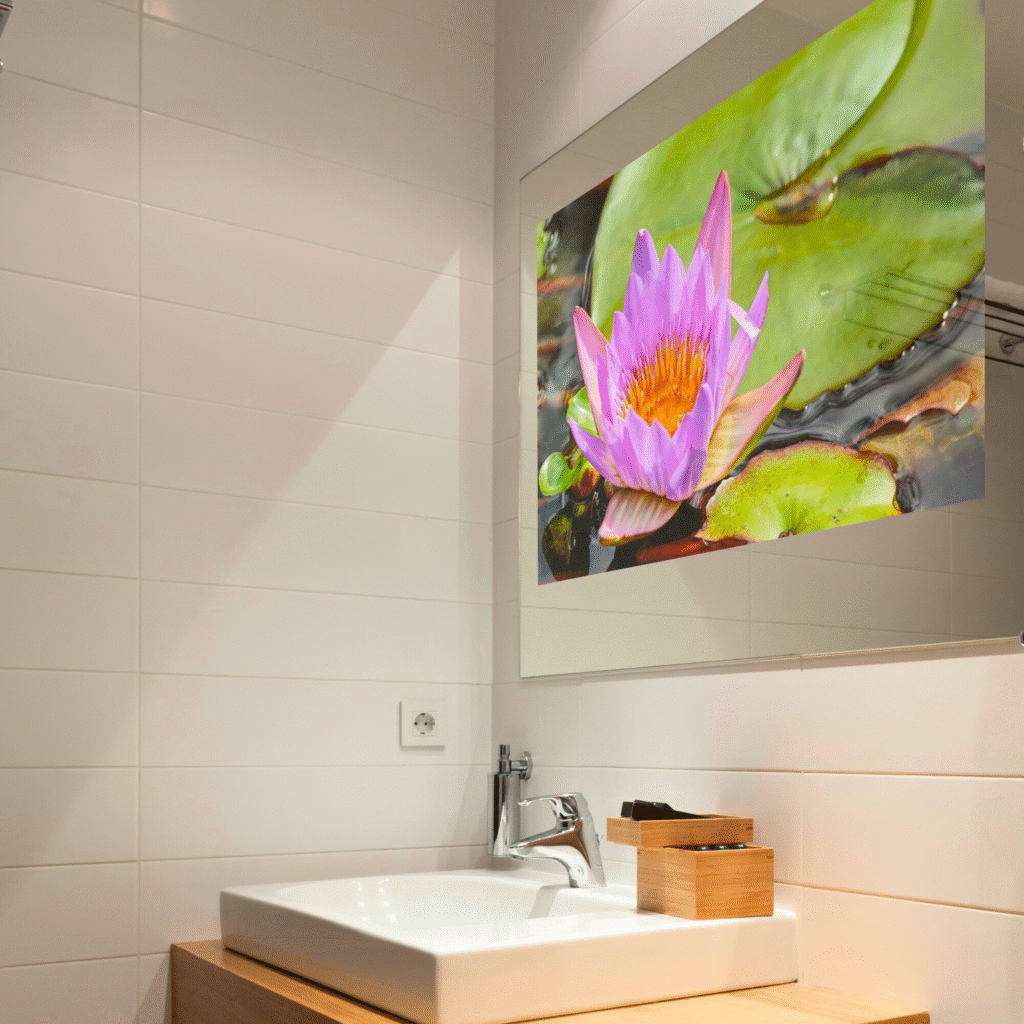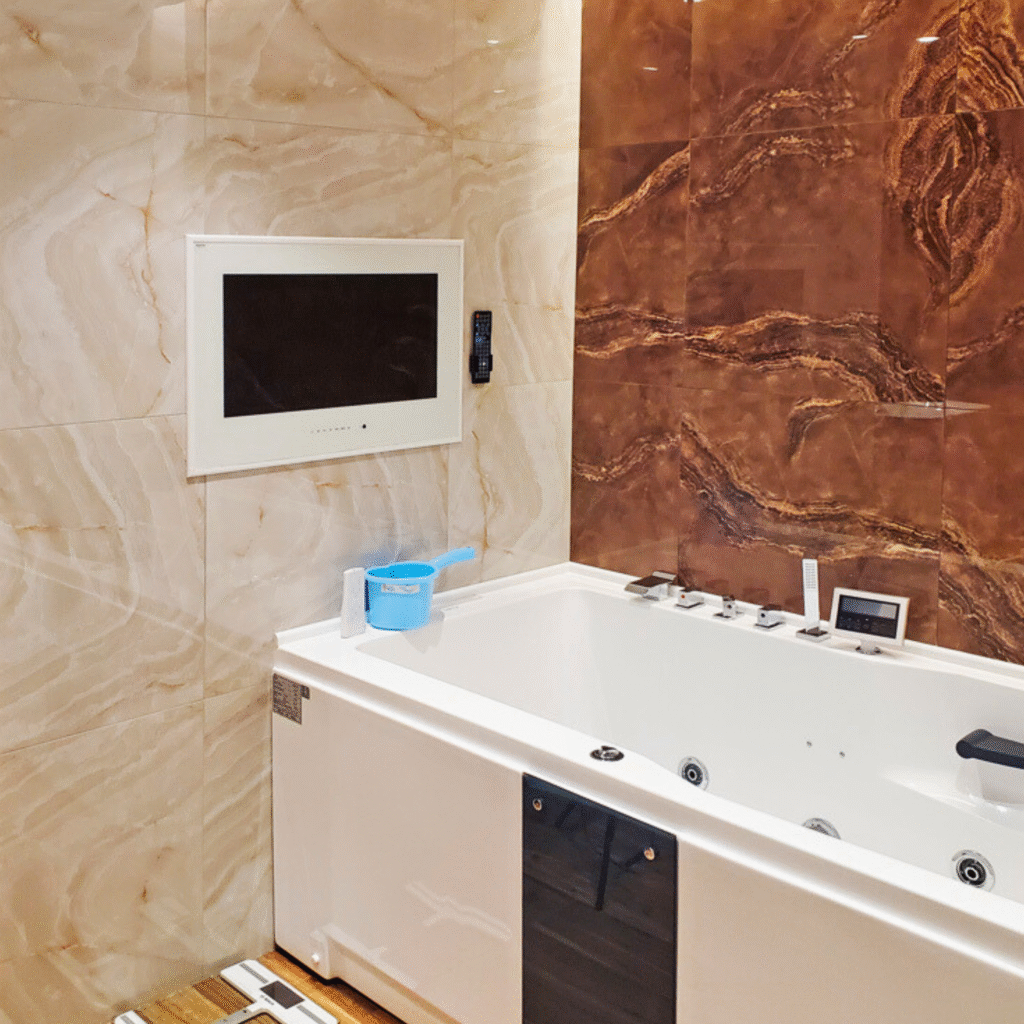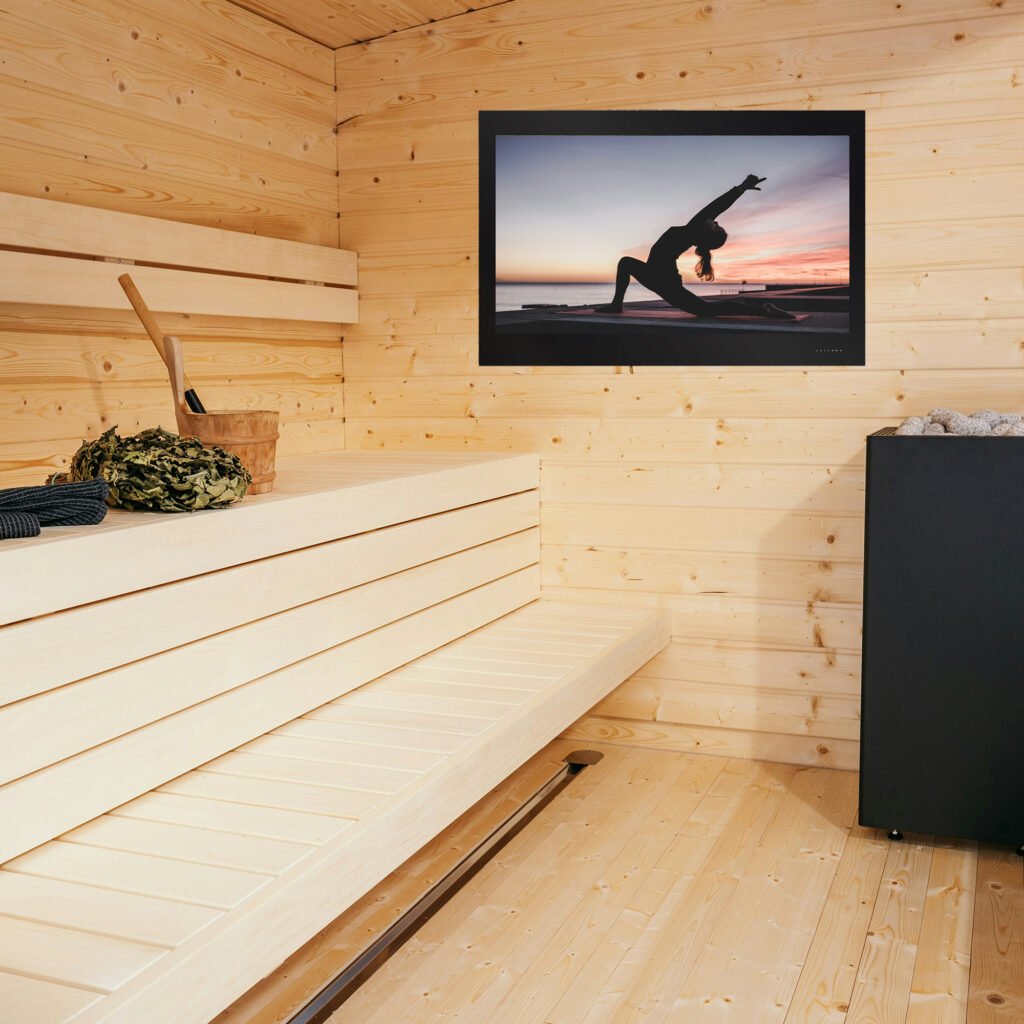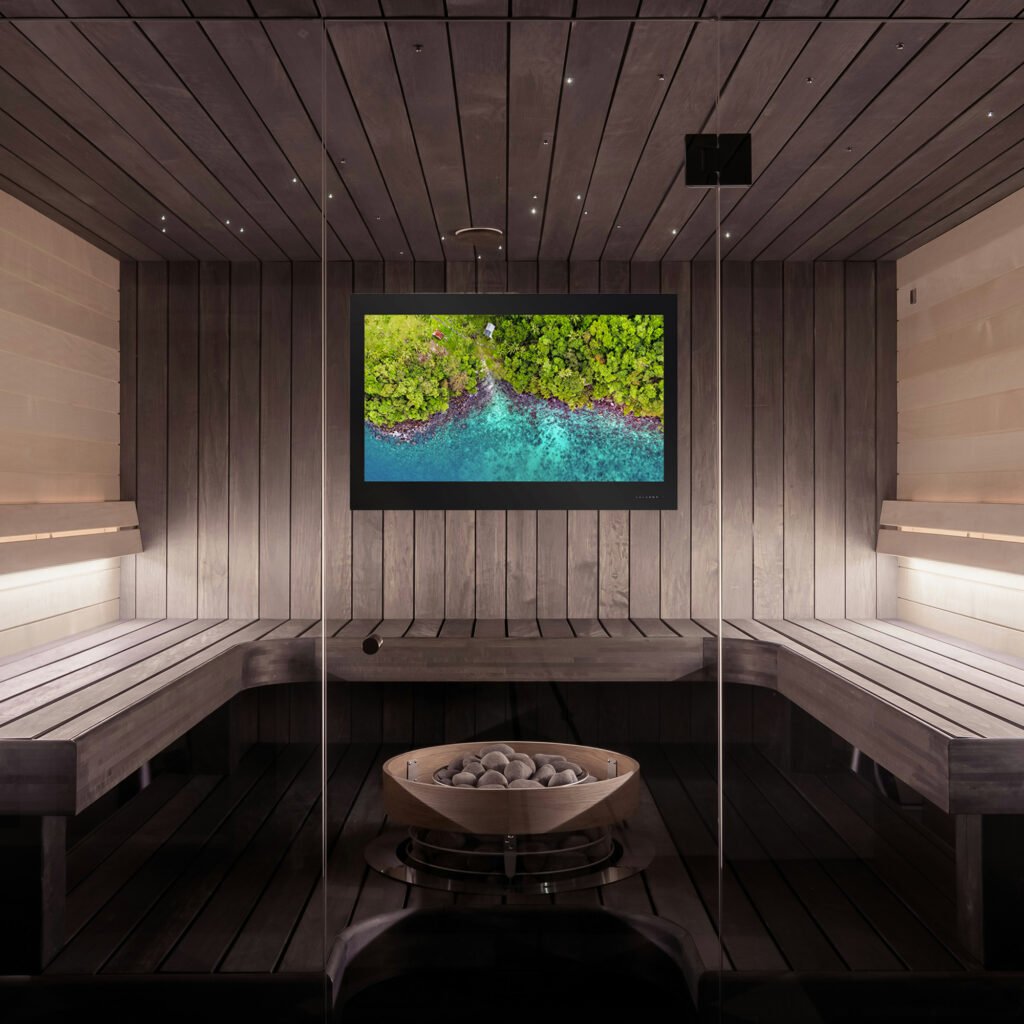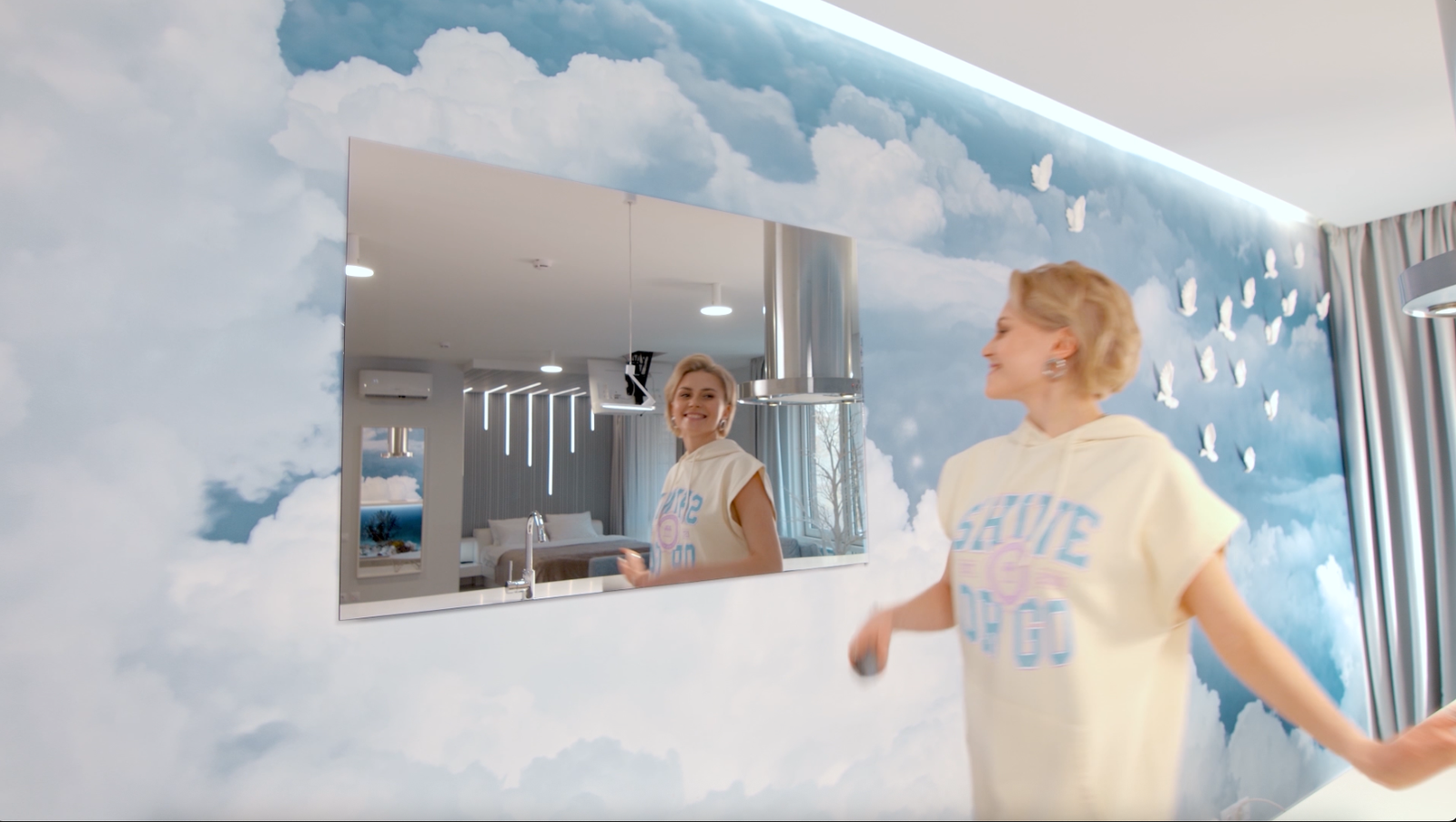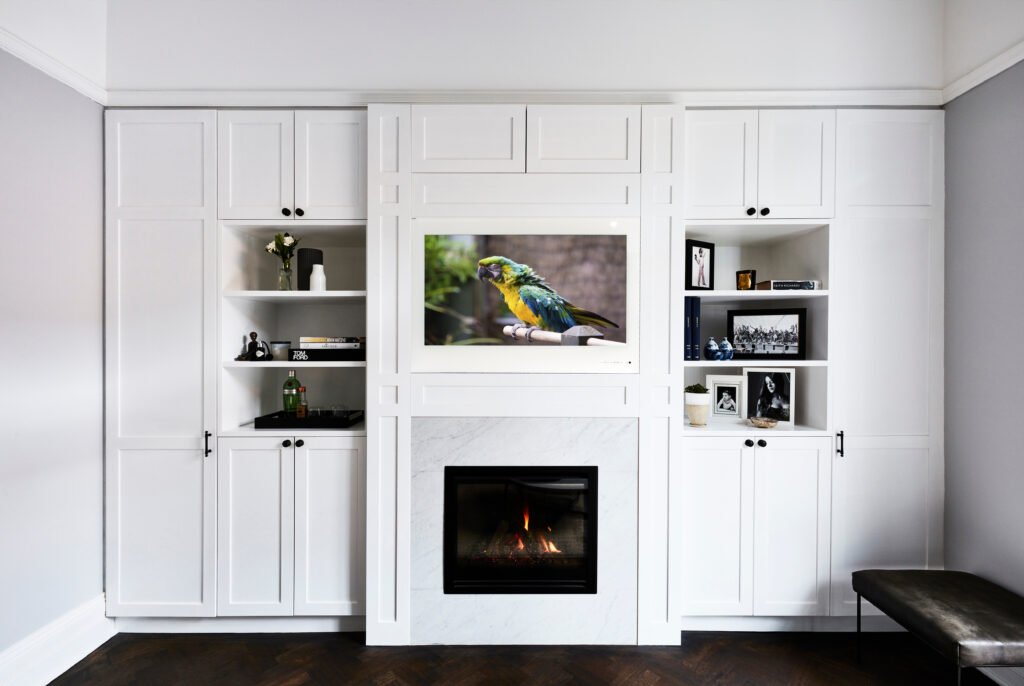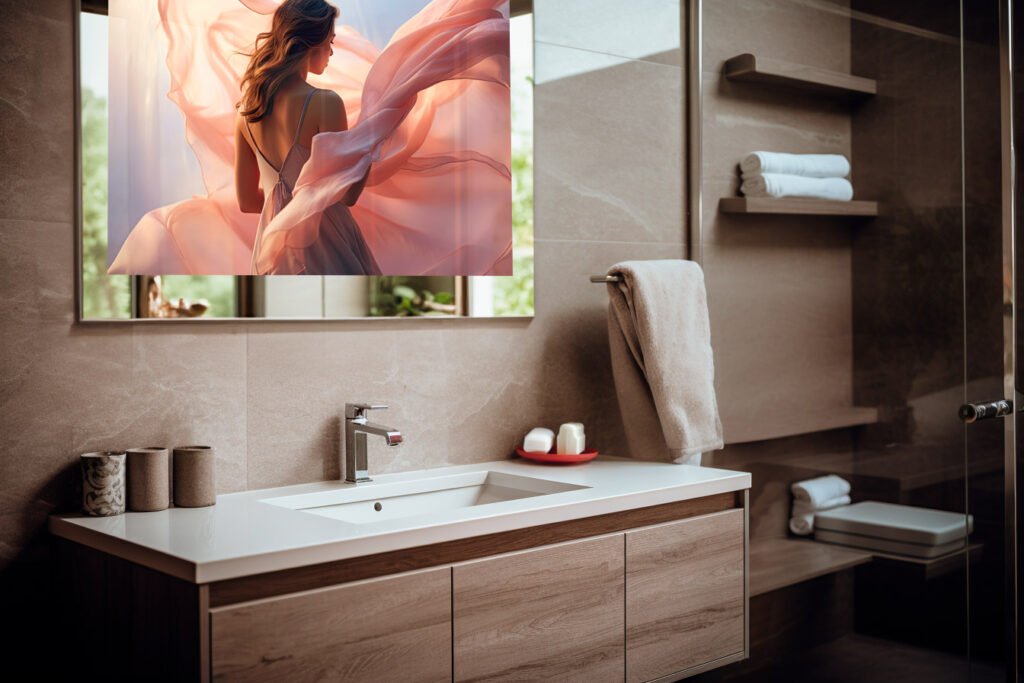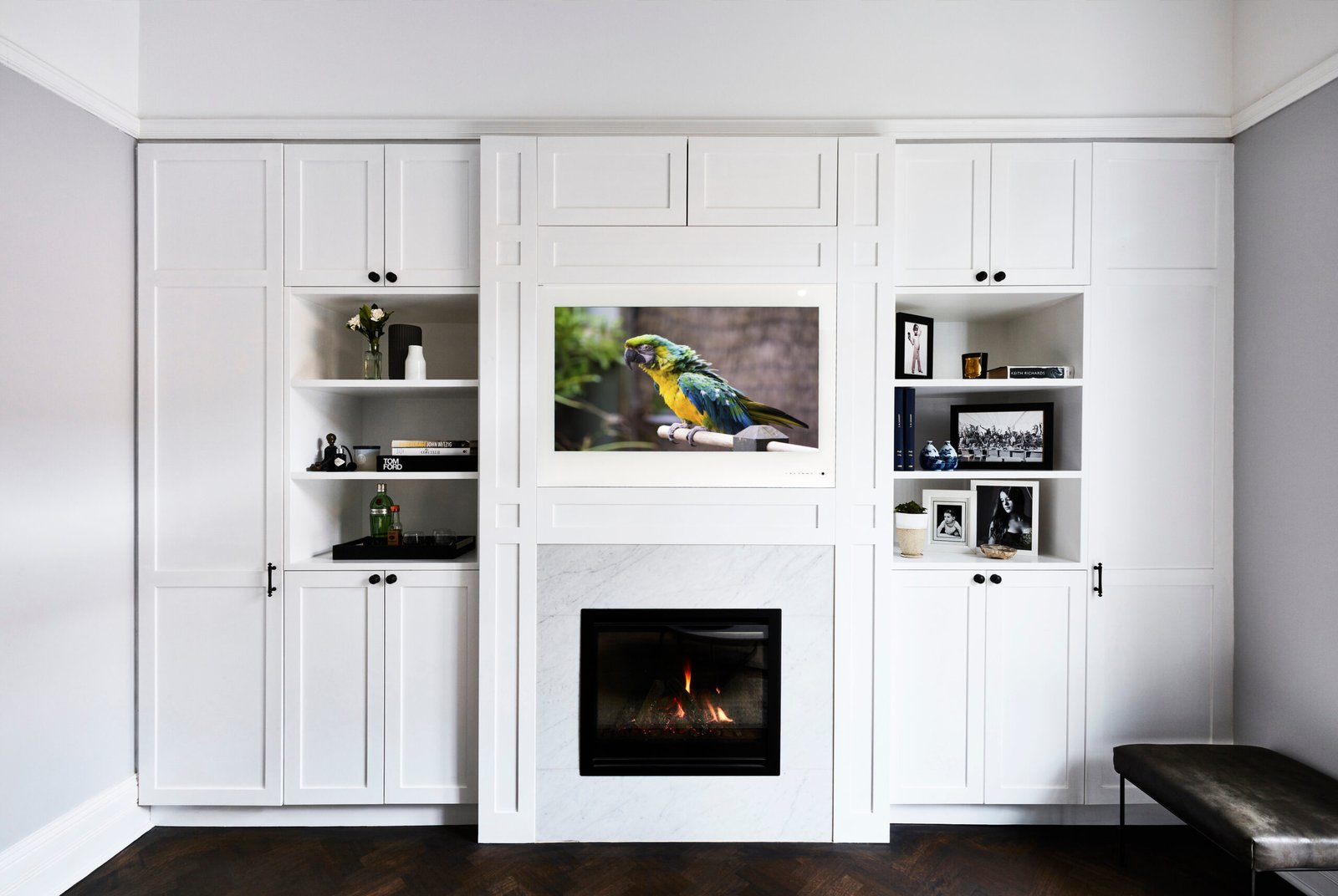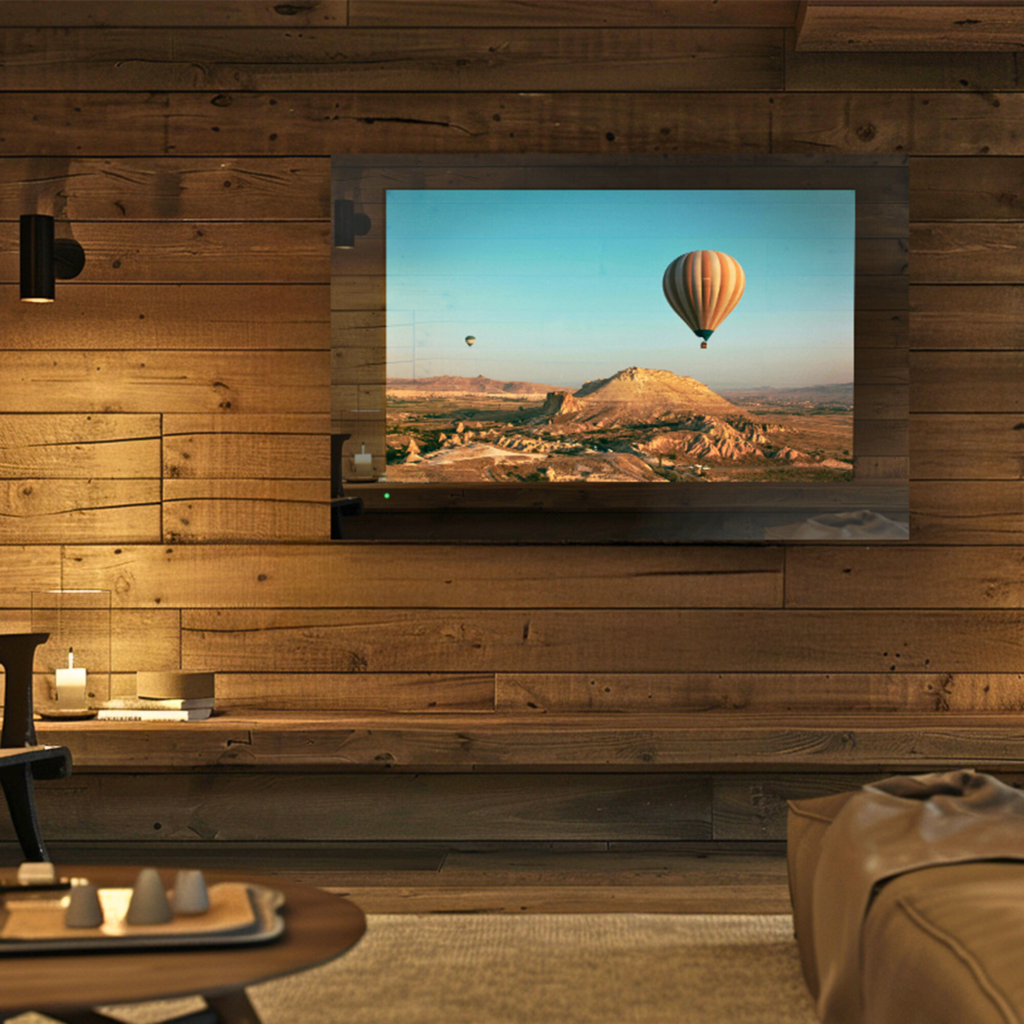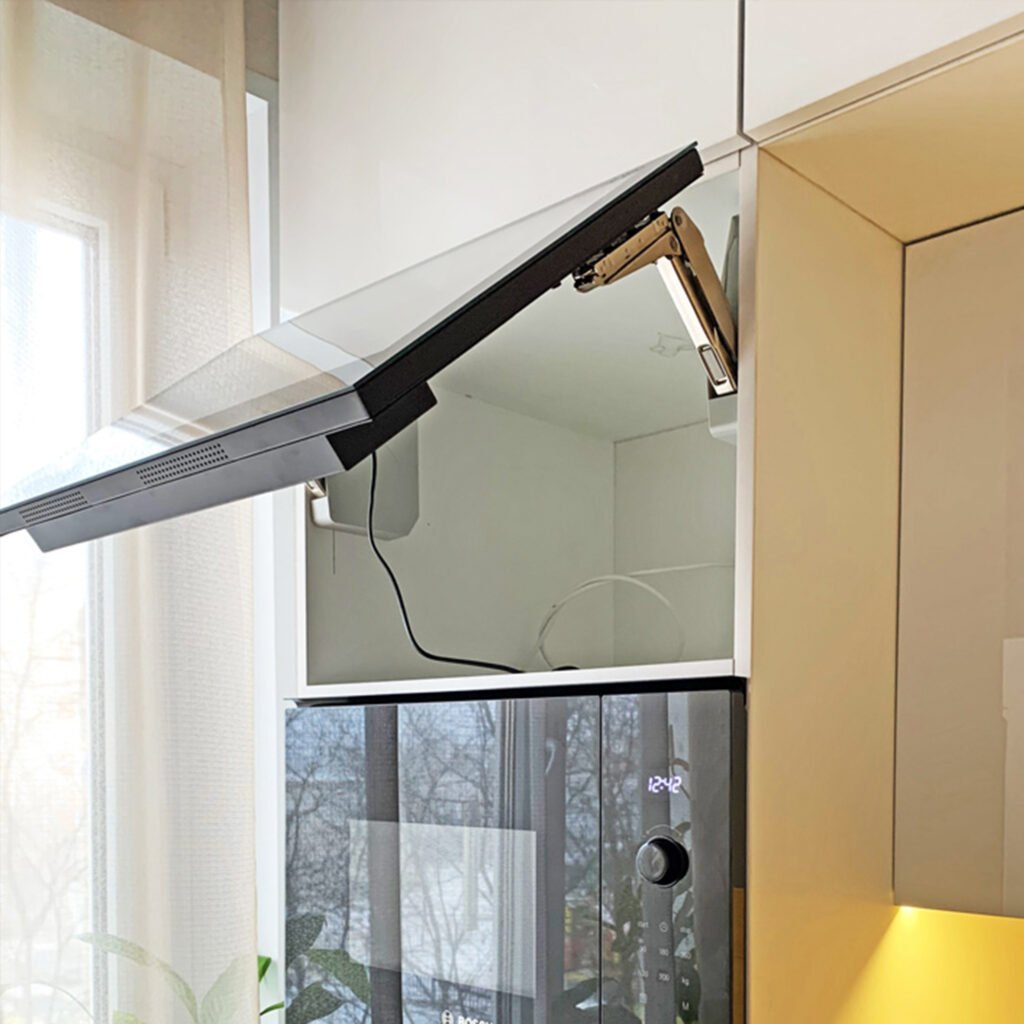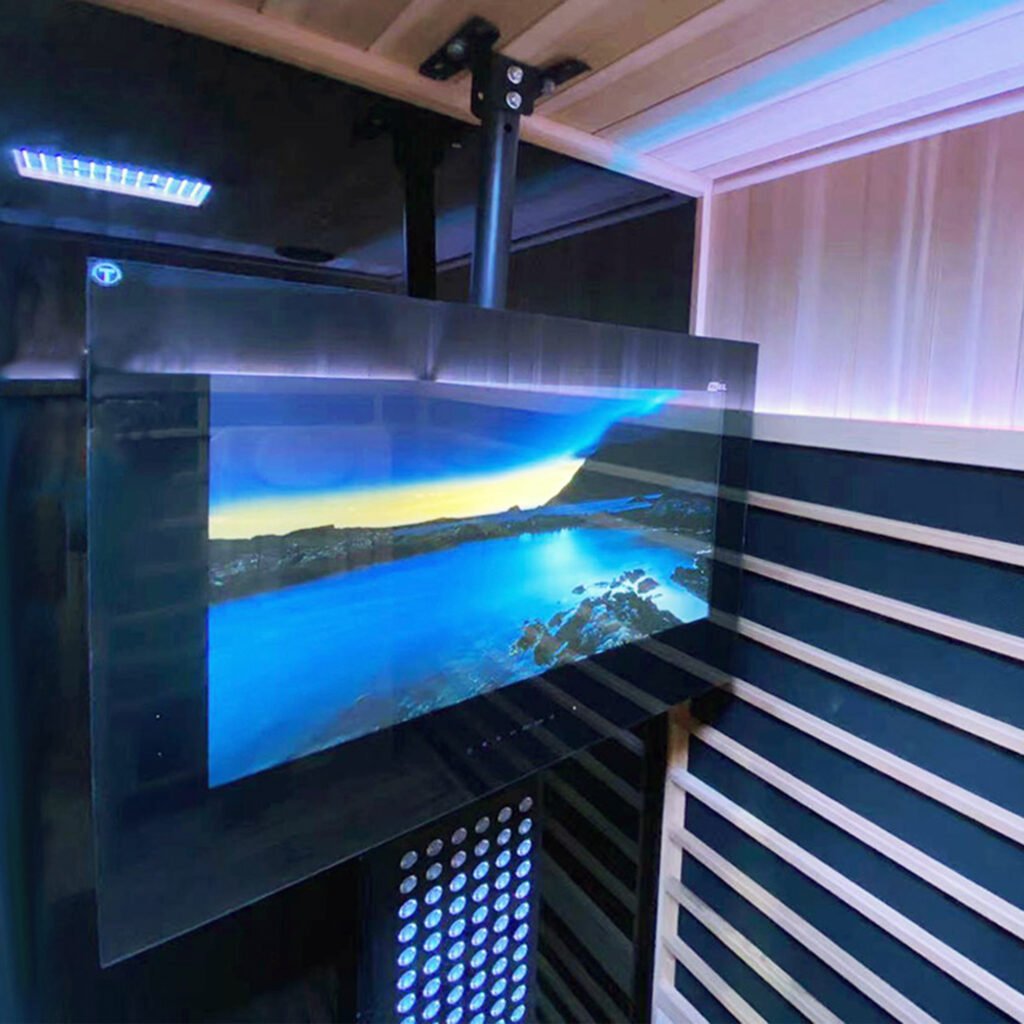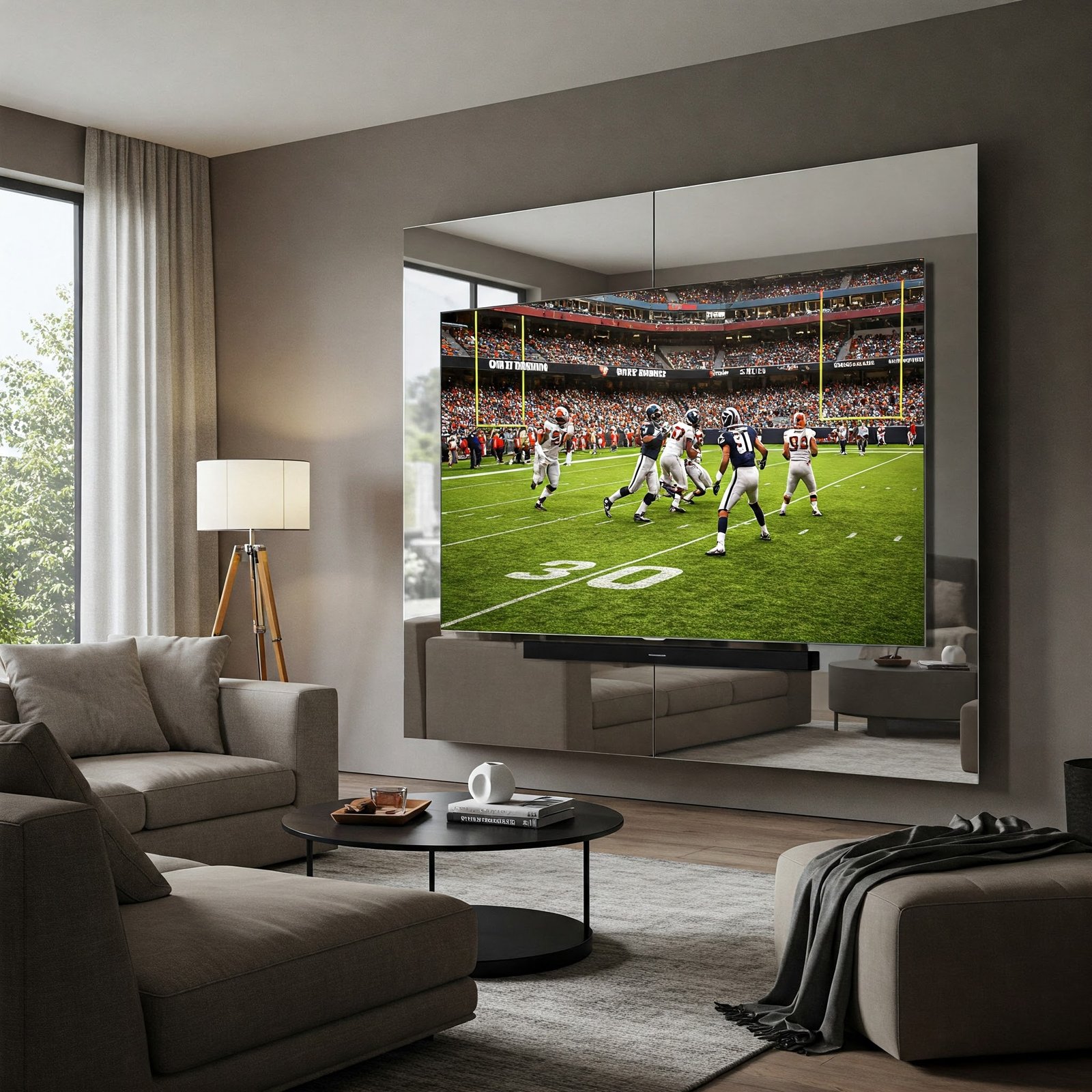

A large mirror that transforms into a TV is a room-changing experience. It’s especially striking to have a full mirror on the wall where your old television once stood. At Parallel AV, our Magic Mirror TVs are increasingly popular in a variety of spaces, including luxury living rooms, bathrooms, kitchens, and pool areas. Below, we’ll cover the key technical details and considerations you need to know when evaluating a mirror television.
What is a Magic Mirror TV and How Does It Work? In this article, we’ll explain the technology and terms commonly used for TVs that look like mirrors—often called Mirror TVs, Magic Mirrors, or Vanishing TVs.
1. WHAT IS A MIRROR TV?
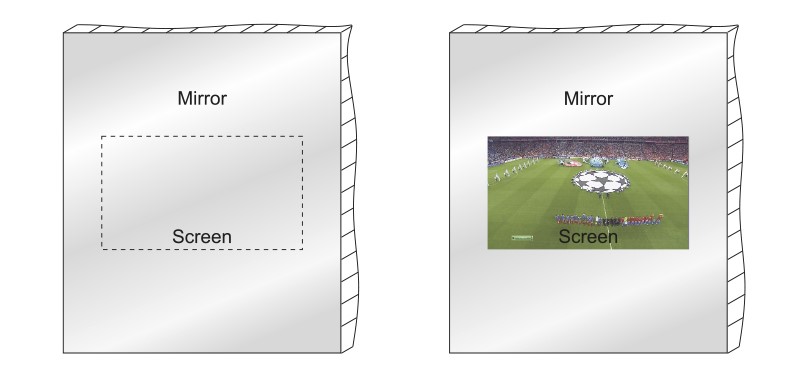
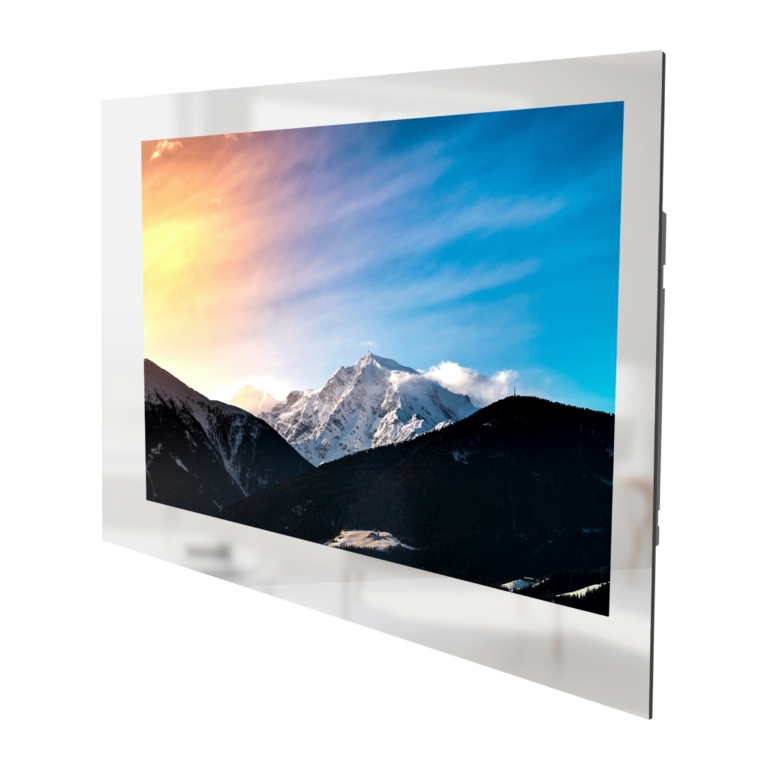
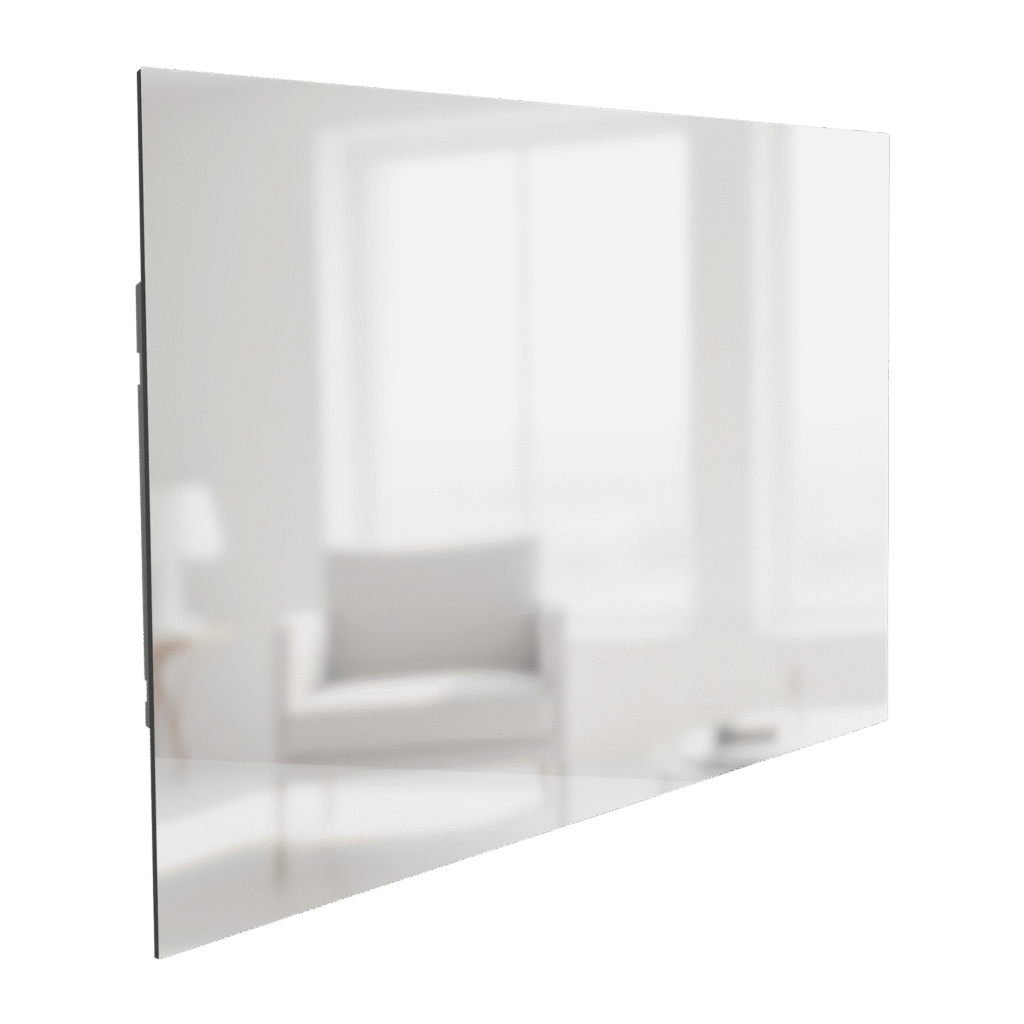
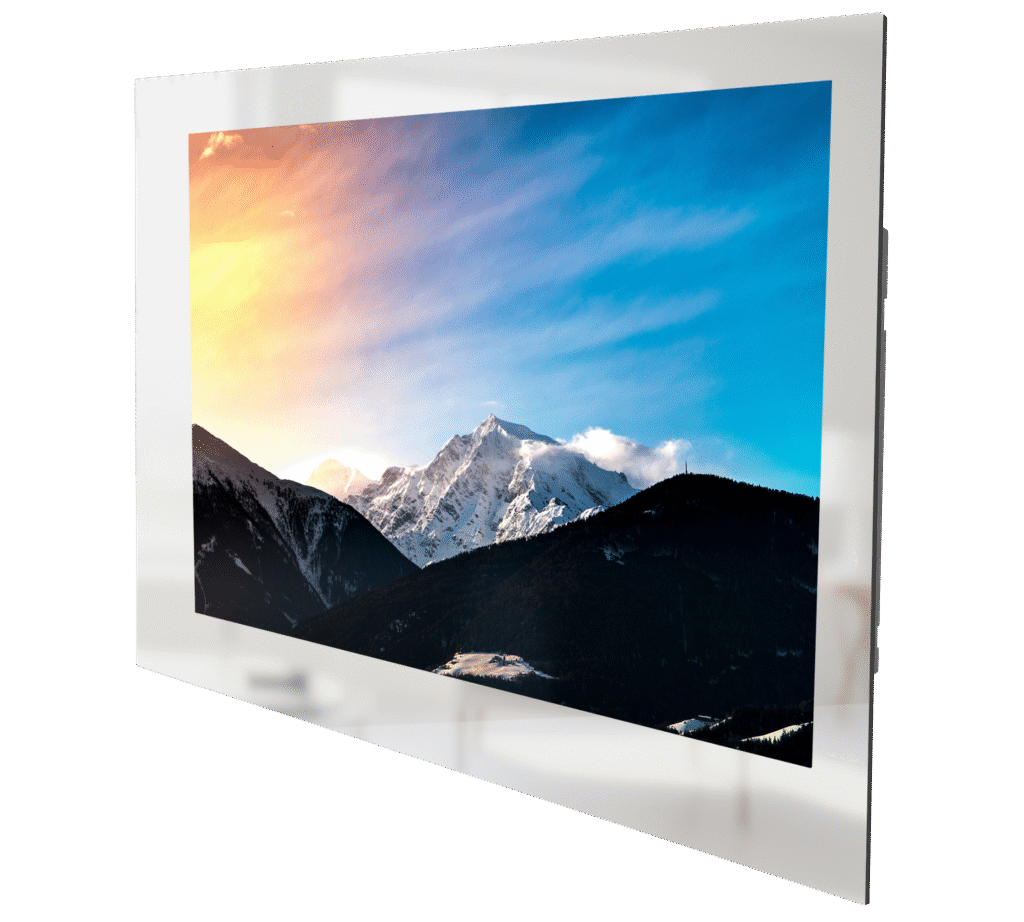
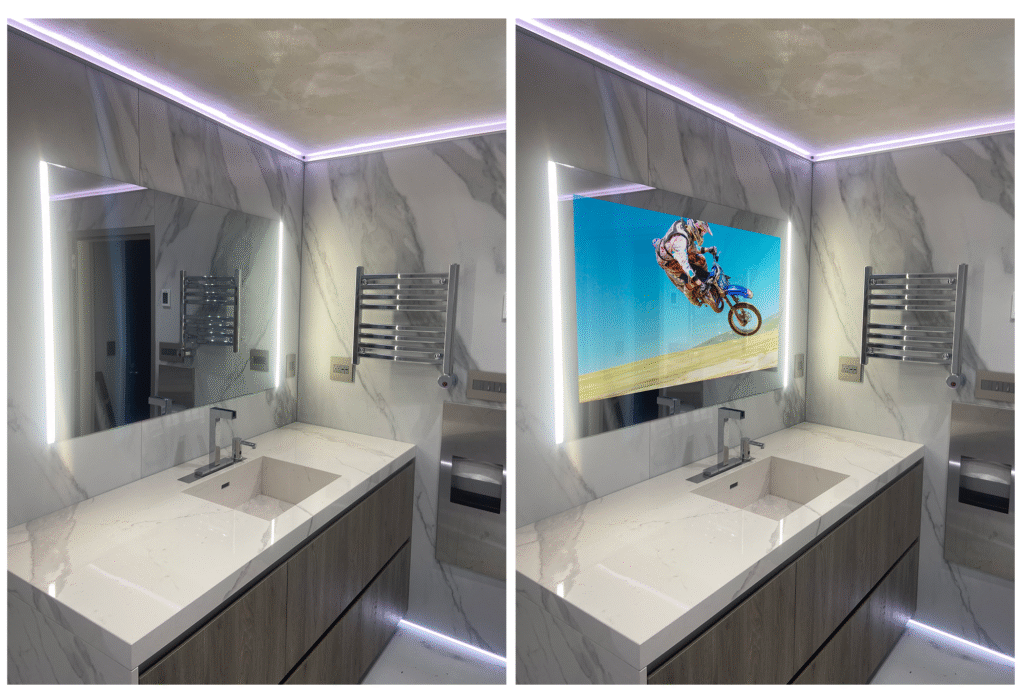
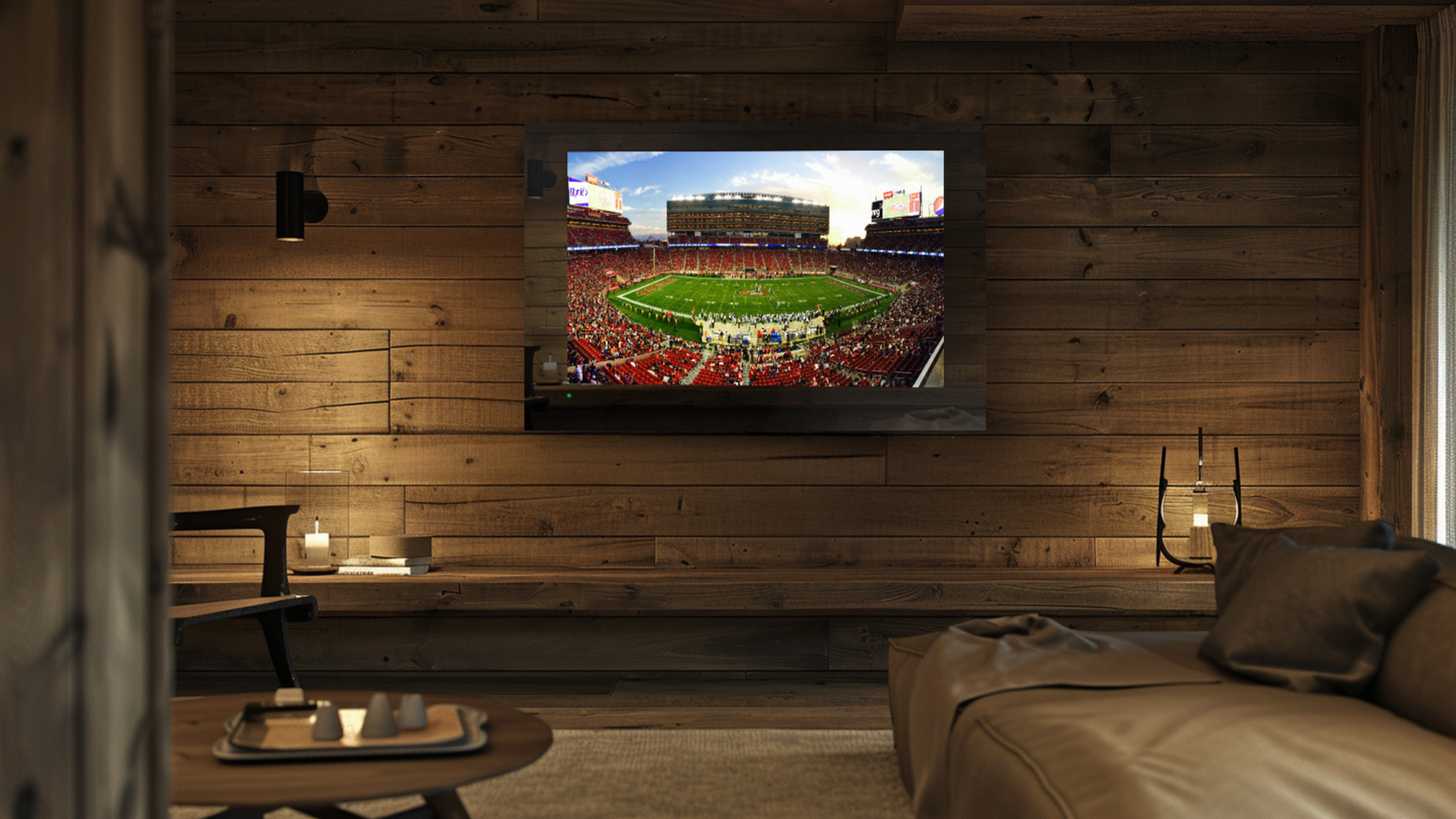
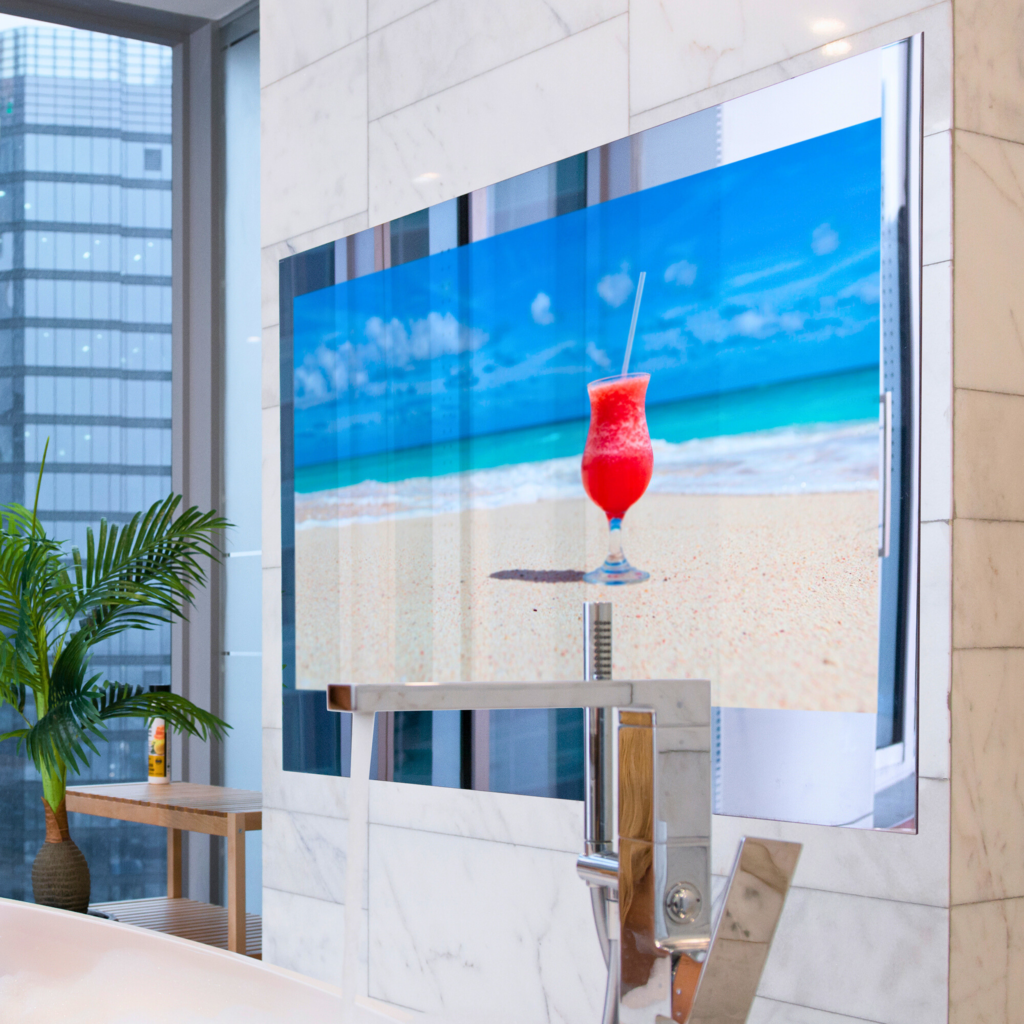
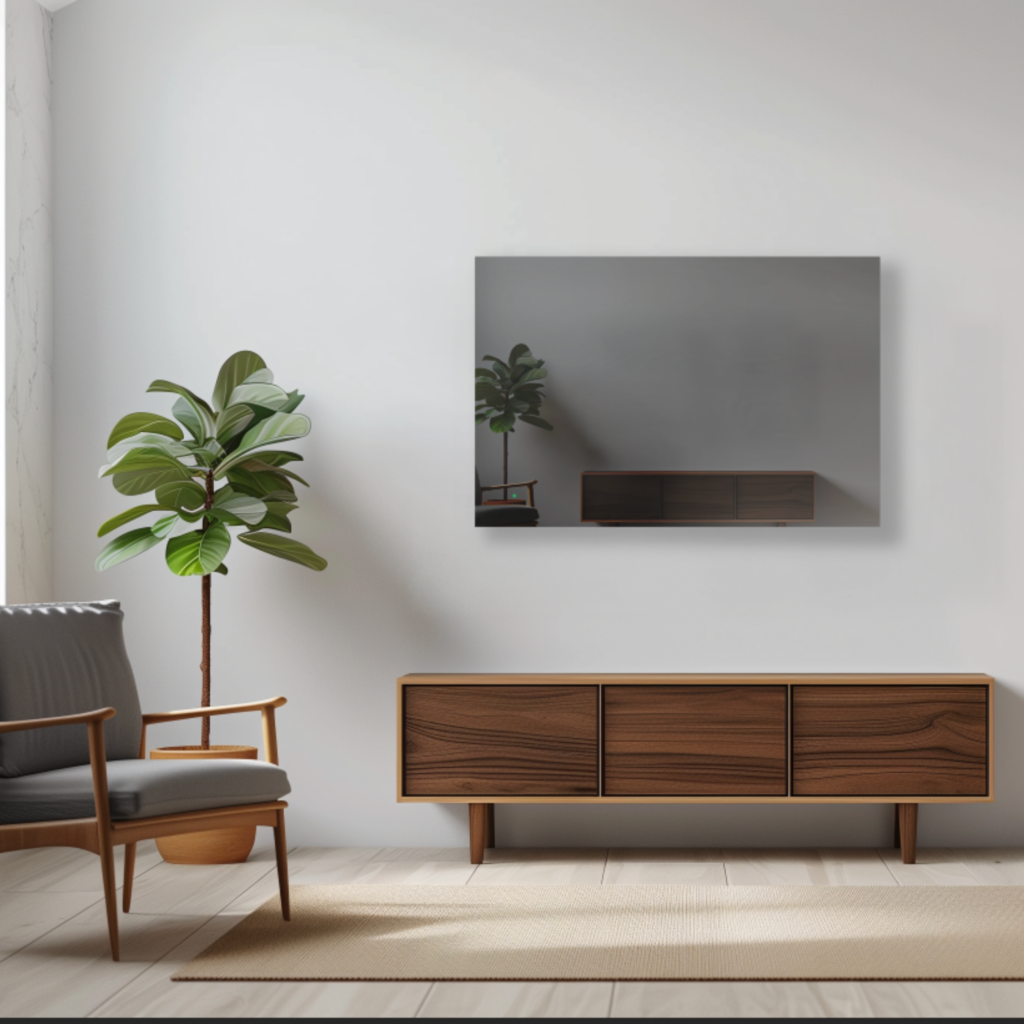
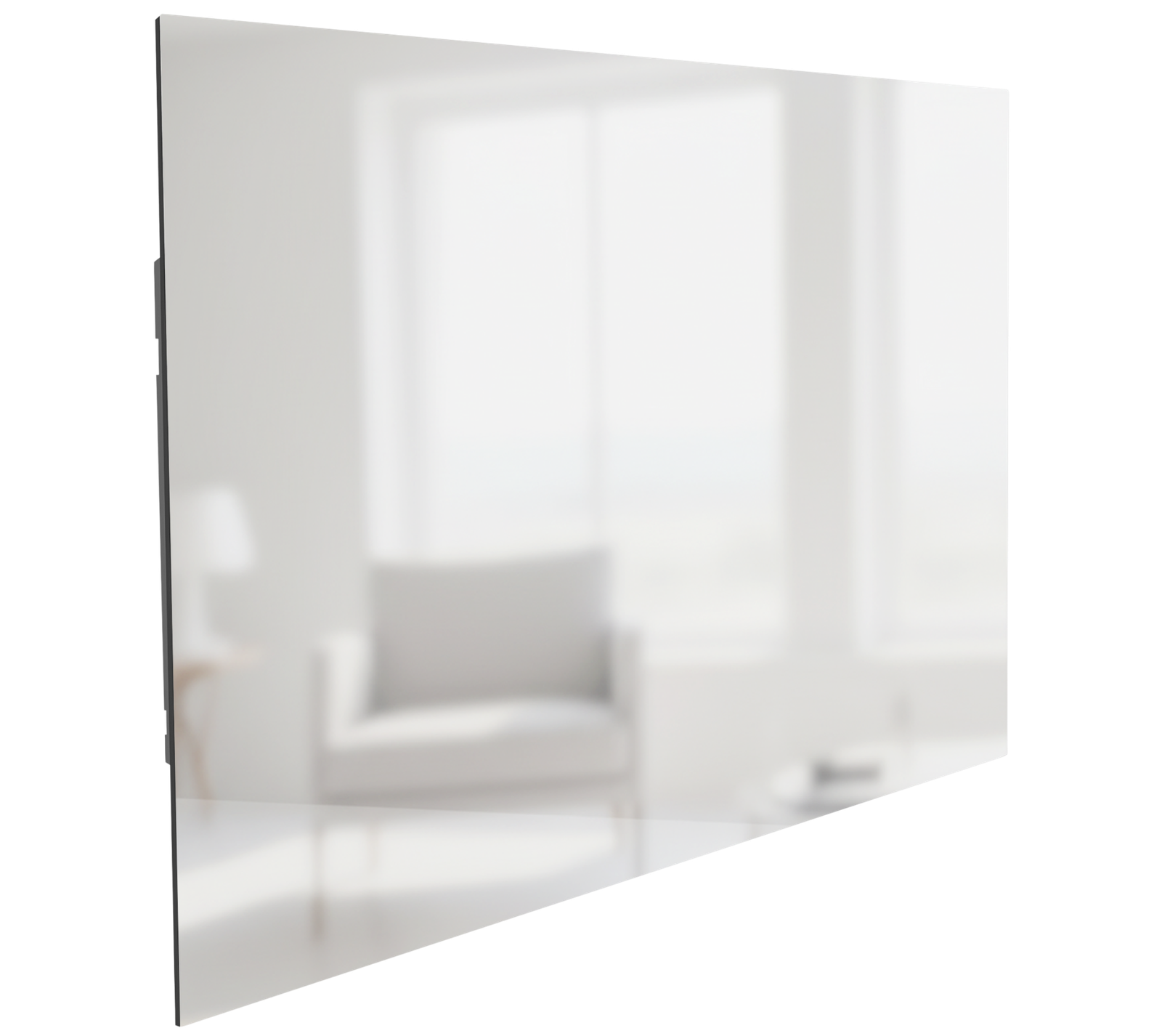
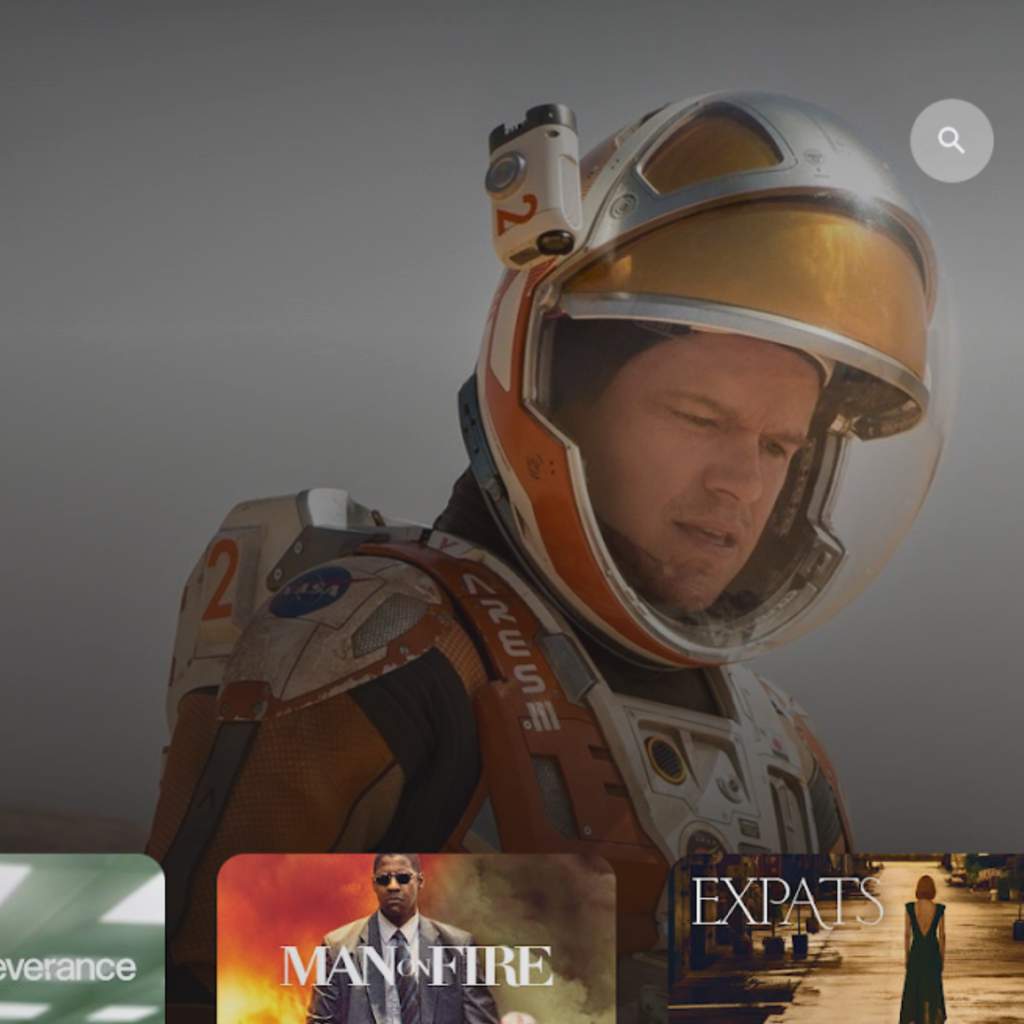
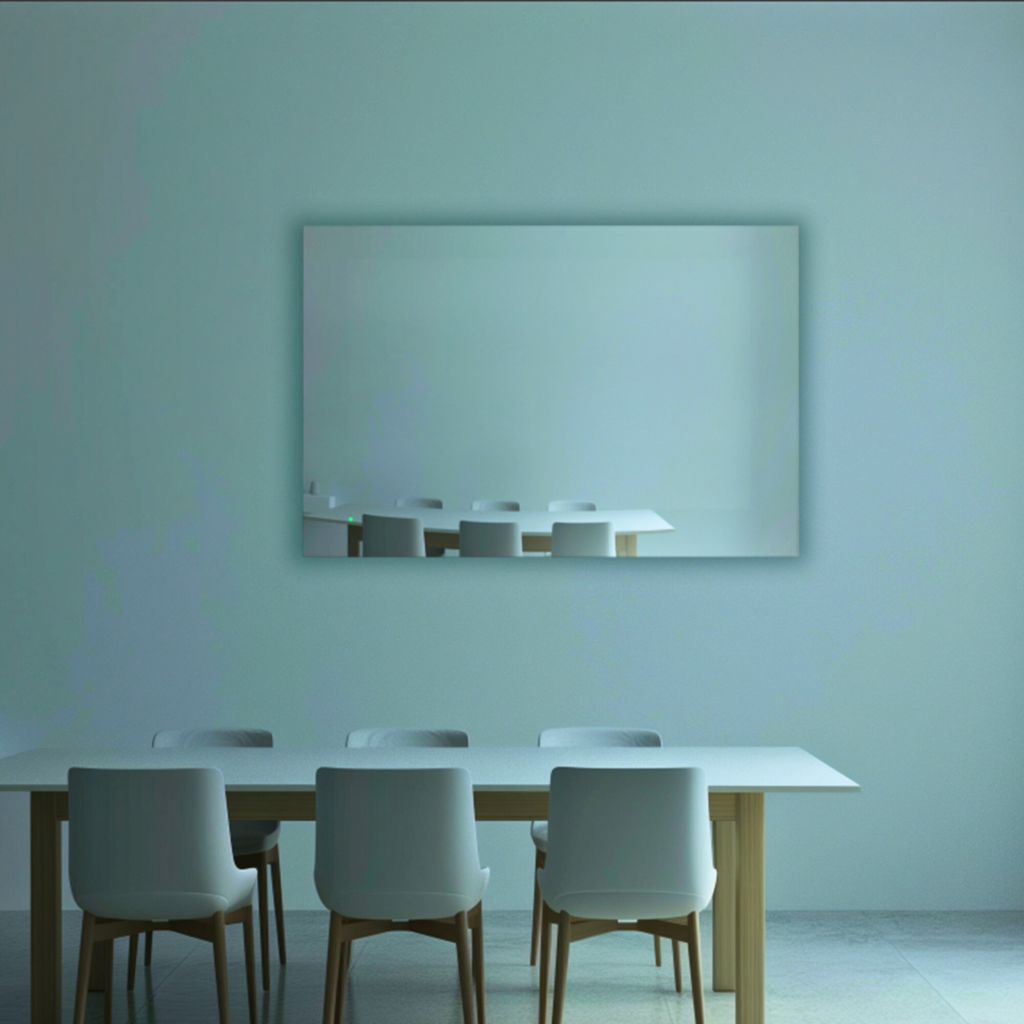
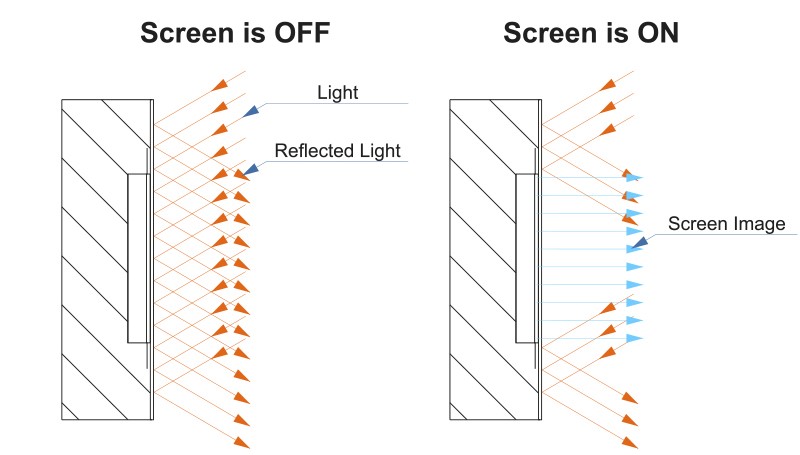
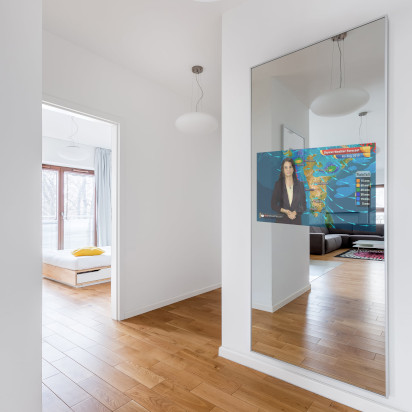
A Mirror TV is a screen placed behind a semi-transparent mirror. When the screen is off, it looks like a plain mirror; when the screen is on, the display becomes visible. Because of this disappearing effect, it is often called a Magic Mirror TV.
Most models on the market range from 15 inches to 55 inches in screen size. There are two main design types:
- Standard design Mirror TVs – Designed for in-wall or on-wall installation, these come as an “all-in-box” set with fixed screen and mirror sizes for standard setups.
- Custom design Mirror TVs – Made to order to fit a specific interior, with mirror glass cut to the exact size required.
2. WHICH MIRROR TYPE IS USED FOR A MIRROR TV?
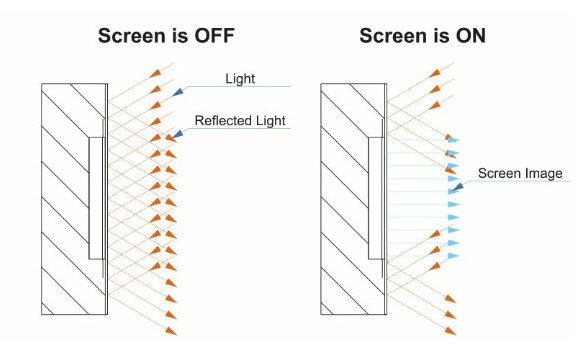
Of course, there’s no actual magic, just simple physics behind the disappearing effect. Mirror TVs use a special semi-transparent mirror that reflects some light to create the mirror effect when the screen is off, while allowing the light from the hidden screen to pass through so the image is visible when the TV is on. For more technical details, see paragraph 4 below.
3. WHAT’S BEHIND THE MIRROR?
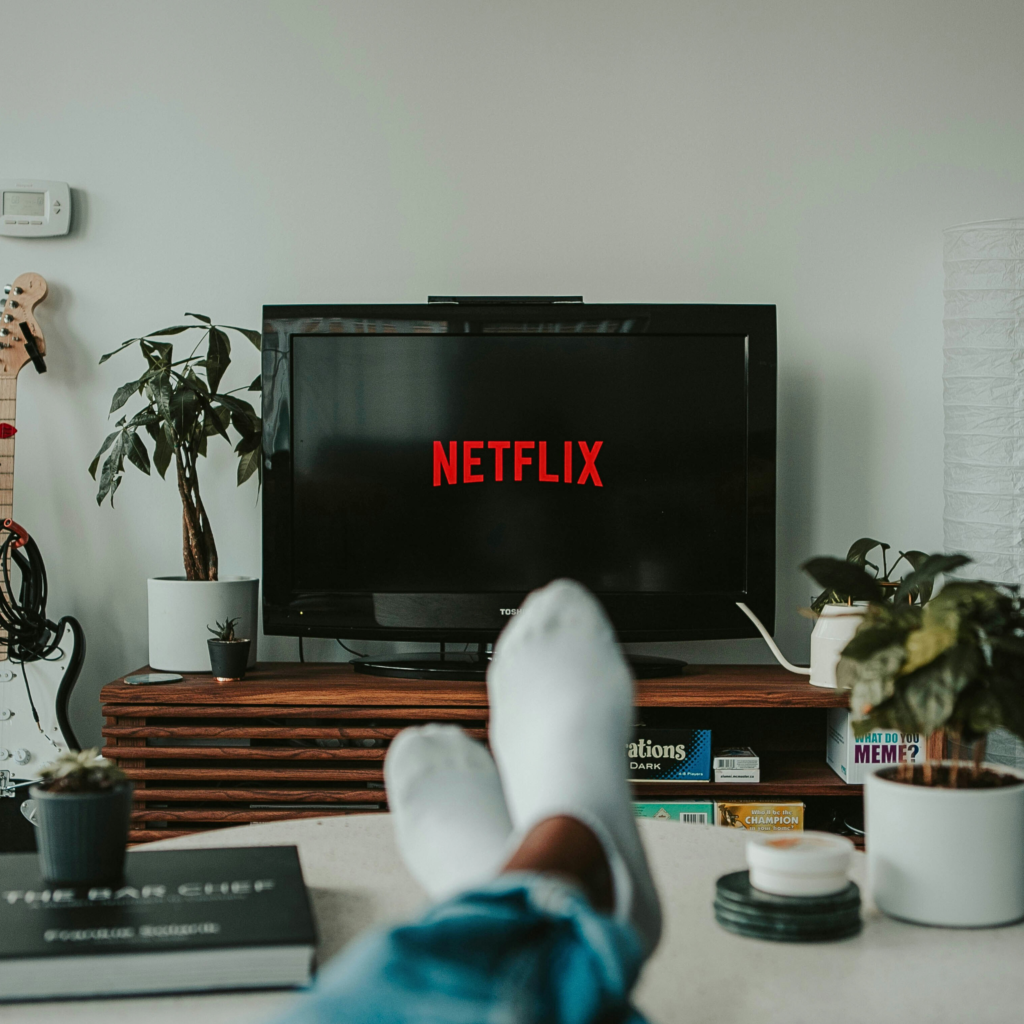
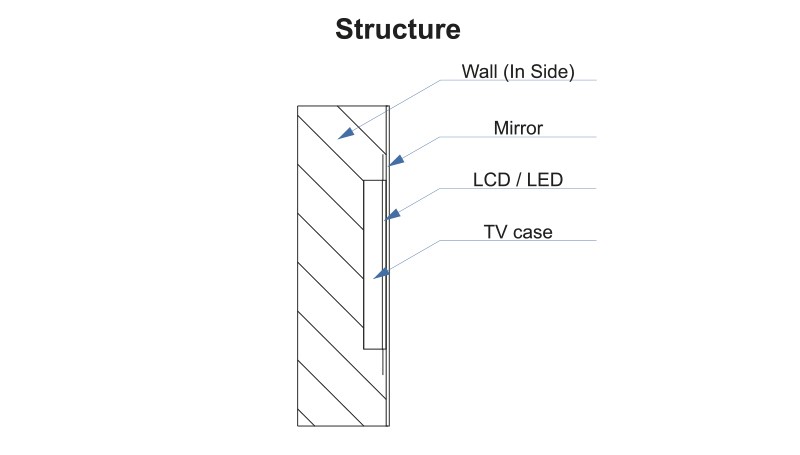
A Mirror TV can use either a regular consumer TV mounted behind the mirror or a specially designed TV built for this application. While consumer TVs are lower in price and come with familiar interfaces and remotes, they aren’t designed for this installation and can present several issues: parts of the TV may be visible through the semi-transparent mirror due to gaps, and the brightness is often too low—especially for smaller sizes like 19” or 21.5”.
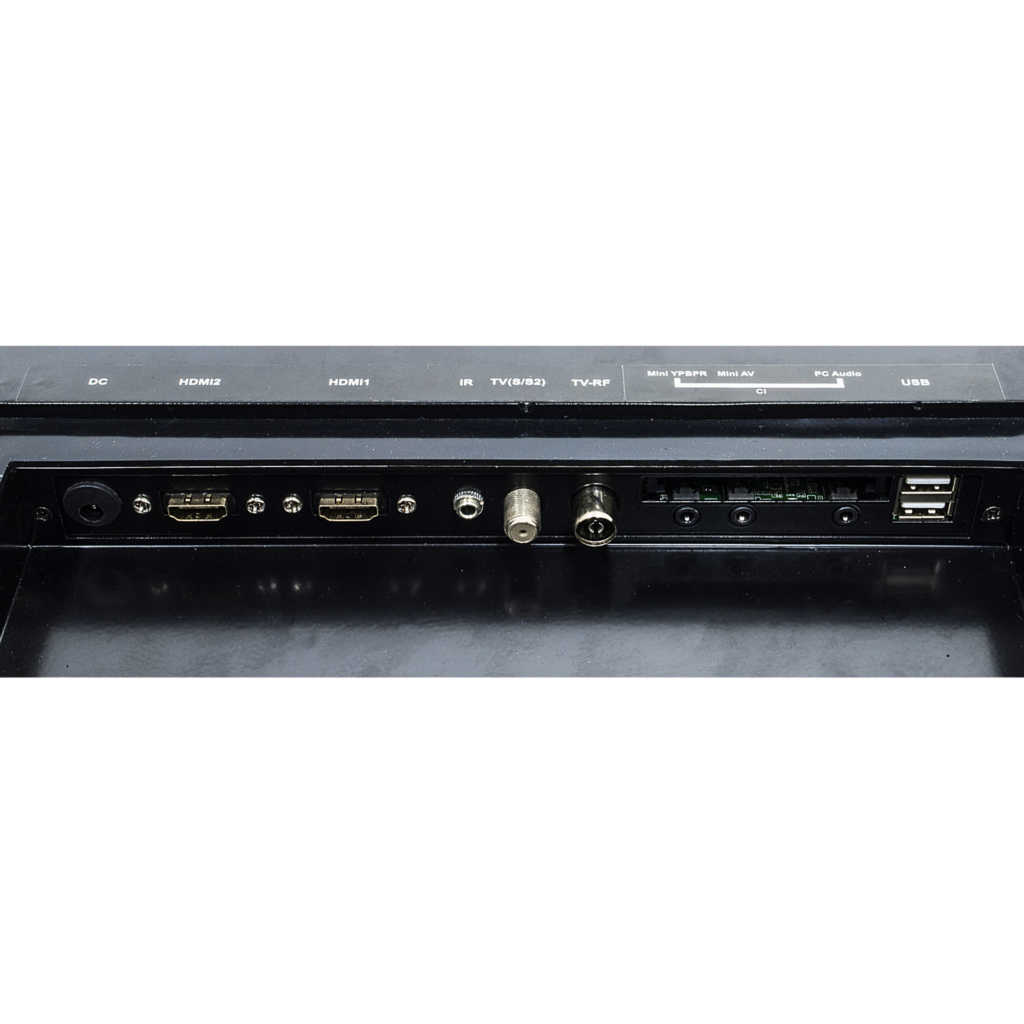
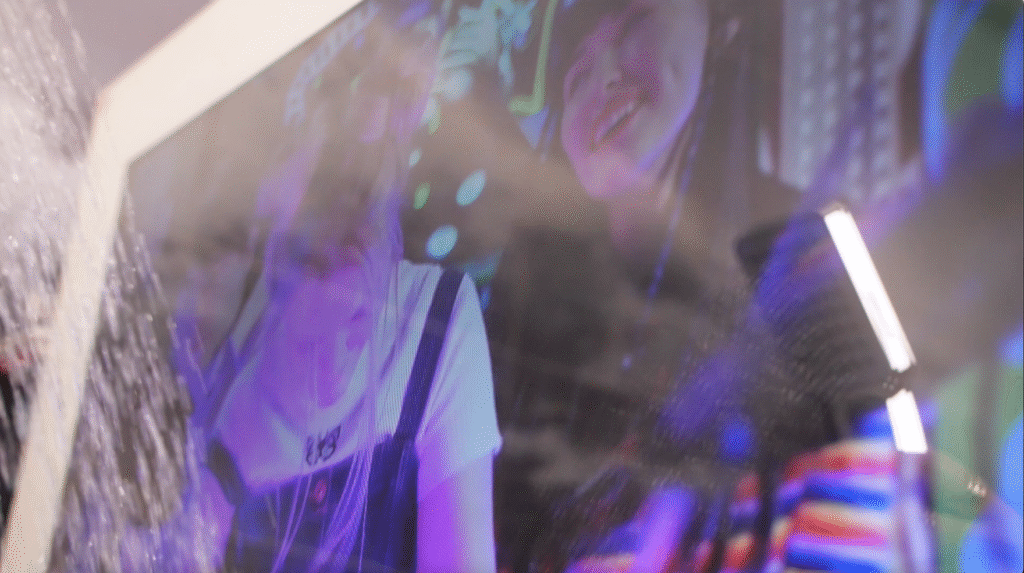
For the best results, it’s recommended to use a TV panel specifically made for mirror installations. These special TVs typically feature a metal heat-dissipation case sealed precisely to the mirror (often with waterproofing), and high-brightness LCD/LED panels that maintain clear image quality even in daylight.
4.TECHNOLOGY BASICS, OR THE MOST IMPORTANT TO KNOW WHEN YOU CHOOSE A MIRROR TV
When choosing a Mirror TV, two key factors are the mirror’s transmission rate (T) or reflectance rate (R = 1 – T), and the screen brightness.
Transmission and reflectance are a trade-off: since R + T = 1, the higher the reflectance for a perfect mirror effect when the screen is off, the lower the transmission for the TV image when it’s on. Typically, transmission rates (T) range from 0.3 to 0.7, corresponding to reflectance rates (R) from 0.7 to 0.3.
Screen brightness is the most important parameter for a Mirror TV. For example, if you place a regular PC monitor behind a semi-transparent mirror with a 0.5 transmission rate, a screen with an original brightness of 200 cd/m² will only deliver 100 cd/m² behind the mirror—far too dim to watch in daylight. That’s why manufacturers use high-brightness panels to ensure good Mirror TV performance.
Even if you know the exact transmission (T) or reflectance (R) rates and the screen brightness, it’s strongly recommended to check the real performance in person or via video review. High transmission rates can reveal parts of the internal structure (like the frame or components), making the mirror effect less convincing when the screen is off. Additionally, some LCD panels may produce color shifts, so factory adjustments are necessary for the best visual effect.
AVEL Mirror TVs from Parallel AV
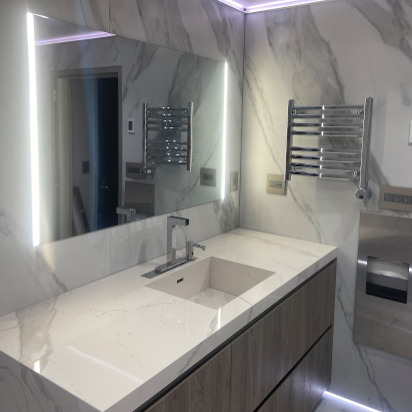
At AVEL and Parallel AV, we understand the delicate “balance” between mirror reflectance and screen brightness. That’s why we use different mirror types and LCD/LED panels for each size to optimize real-world performance.
In addition to standard-brightness panels, we also offer ultra-high brightness options for special projects or upon customer request. Panels with 700, 800, or 1000 cd/m² are available in sizes ranging from 27” to 75”.
A premium product like our Mirror TV deserves premium performance, which can only be achieved with high-quality, cutting-edge components. We always source the best panels available, as they are one of the most important parts of any TV.